
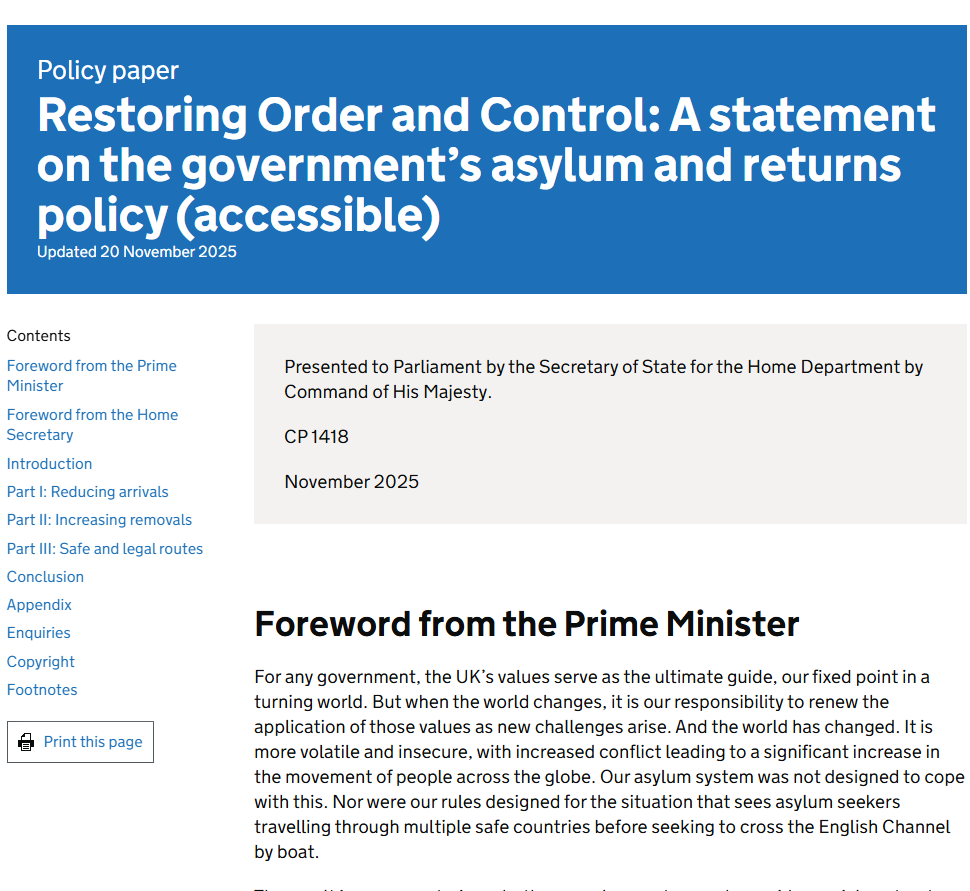
The UK Government has recently released a significant new policy statement titled “Restoring Order and Control,” outlining proposed reforms to the asylum and returns system. These proposals, introduced by the Home Secretary in the past few days, signal one of the most extensive shifts in asylum policy in recent years and they raise many questions for individuals currently seeking protection in the UK.
At Stay UK, we understand how unsettling these developments may feel. Below, we break down what has been announced, what remains unclear, and what you should consider if you or a loved one may be affected.
Key Proposed Changes to the Asylum Process
1. Extending the Settlement Period for Refugees
One of the most notable proposals is a dramatic extension of the route to settlement.
Under the current system, refugees can apply for Indefinite Leave to Remain (ILR) after 5 years.
The new proposal would extend this period to 20 years, representing a fundamental shift in how long people must wait before securing long-term stability in the UK.
This change has generated serious concern among asylum seekers, community organisations, and legal professionals, as it could delay access to secure status, family stability, employment opportunities, and long-term integration.
2. Restrictions on Family Reunification
The policy statement also outlines plans to introduce new restrictions on family reunion rights, potentially affecting the ability of refugees to bring close family members to safety in the UK.
While details are limited at this stage, any tightening of family reunion rules would disproportionately affect children, partners, and other vulnerable dependants who rely on these pathways.
3. A Push to Reduce Arrivals
The Government has reiterated its intention to reduce the number of asylum arrivals, including through increased enforcement and expanded returns measures. These proposals reflect a continued shift towards deterrence-based policy, though the practical effectiveness and humanitarian impact remain subjects of active debate.
4. Removal of Support for Certain Asylum Seekers
Another significant proposal is the removal of financial and accommodation support for asylum seekers who:
- Do not comply with removal instructions, or
- Are found to be working illegally.
The withdrawal of support for individuals in these circumstances may leave many without access to basic needs, raising serious concerns about safety, vulnerability, and adherence to the UK’s international obligations.
What Remains Unclear
Although the policy statement outlines broad intentions, many crucial details have not yet been confirmed. These include:
- No specific implementation timeline has been provided.
- Several proposals are still under consultation, meaning they may change before becoming law.
- It is unclear whether the changes would apply retrospectively to those already in the asylum system.
This lack of clarity leaves many people, especially those who have been waiting months or years for a decision facing increased uncertainty about their futures.
The Impact on Individuals and Families
The mental and emotional impact of prolonged uncertainty cannot be overstated. Many asylum seekers are already navigating trauma, separation from loved ones, and ongoing instability. The prospect of longer waiting periods and reduced rights may intensify feelings of fear, stress, and insecurity.
Families, in particular, may worry about how changes to settlement timelines or family reunion rules could affect their ability to rebuild their lives together in safety.
What You Should Do Now
If you or someone you know may be affected by these proposals, it is essential to:
- Stay informed about policy developments
- Seek legal advice early to understand your options
- Keep records of all applications, correspondence, and immigration history
- Avoid making decisions based on assumptions while consultations are ongoing