
In recent months, we have seen a growing number of EU Settlement Scheme (EUSS) applications being refused for dual nationals, particularly individuals who are Brazilian and Italian or Brazilian and Portuguese. These cases often involve people who arrived in the UK before the Brexit cut-off date but only obtained formal recognition of their European citizenship after that date. This article explains why these refusals are happening, what a “notification of error” means, and what remedies may be available.
The Common Scenario We Are Seeing
Many applicants:
- Arrived in the UK before 31 December 2020 using a Brazilian passport.
- Later obtained Italian or Portuguese citizenship by descent.
- Applied under the EU Settlement Scheme and were granted pre-settled status.
- Later applied for settled status, but the application was refused.
The Home Office refusal letters usually state that the applicant was not a “relevant EEA citizen” before the specified date, even if they were later recognised as an Italian or Portuguese citizen from birth.
Home Office Refusal Reason – “Relevant EEA Citizen”
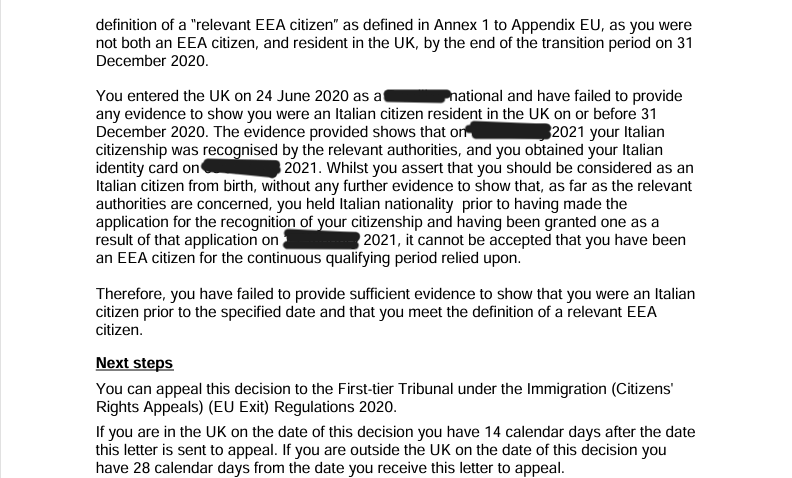
The Home Office often refuses these applications on the basis that the applicant:
- Entered the UK as a Brazilian national, and
- Only had their Italian or Portuguese citizenship recognised after 31 December 2020, and
- Therefore was not both an EEA citizen and resident in the UK before the specified date.
However, this interpretation is highly controversial in cases involving citizenship by descent, because under Italian and Portuguese nationality law, many individuals are considered citizens from birth, even if the recognition process happens later.
Previous Grant of Pre-Settled Status – “Notification of Error”
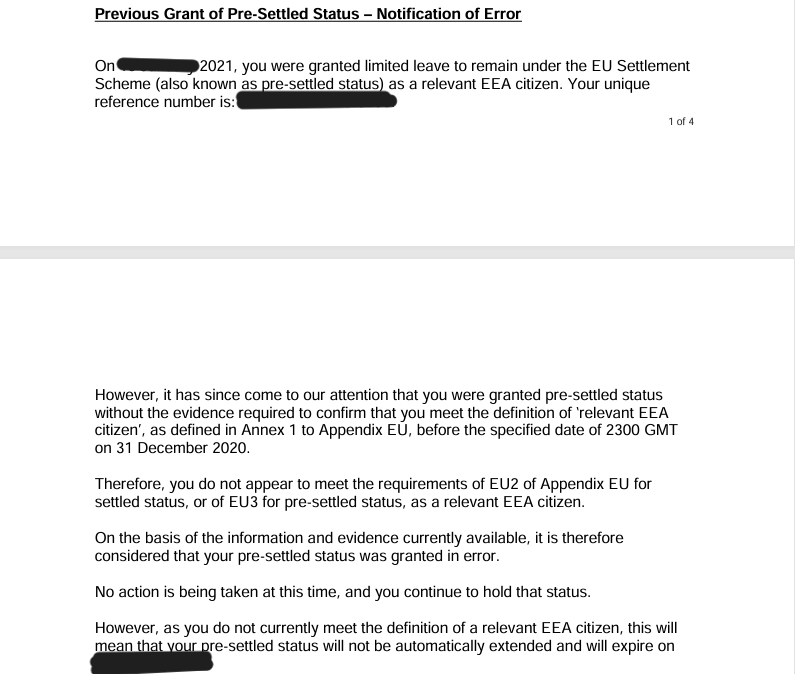
Many refusal letters also include a section called “Previous Grant of Pre-Settled Status – Notification of Error.”
A notification of error usually states that:
- The applicant was previously granted pre-settled status.
- The Home Office now believes that status was granted in error because the applicant did not meet the definition of a relevant EEA citizen before the cut-off date.
- The applicant may keep their pre-settled status for now, but it may not be extended.
Is a Notification of Error Legal?
Yes, the Home Office can correct an error if a status was granted incorrectly. However, this must be a genuine caseworker error, not simply a change in interpretation or policy.
If the applicant was in fact an EU citizen from birth, and later obtains official confirmation from the Italian or Portuguese authorities, it may be arguable that:
- The original grant of pre-settled status was not an error, and
- The Home Office is wrong to refuse settled status.
Each case depends heavily on evidence of citizenship from birth.
Citizenship by Descent – Italian and Portuguese Nationals
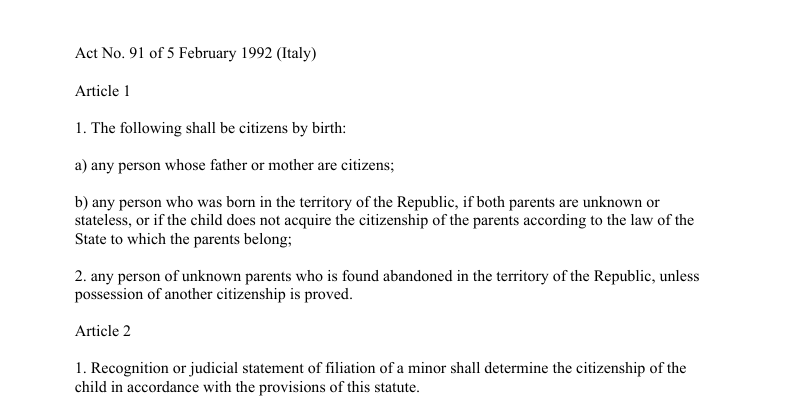
Under Italian or Portuguese nationality law, individuals who obtain citizenship by descent are often considered citizens from birth, not from the date the citizenship was recognised.
To address this issue, we have been advising clients to:
- Complete the relevant nationality confirmation forms.
- Contact the Italian or Portuguese Consulate.
- Request a Citizenship Certificate confirming citizenship from birth.
- Submit this evidence to the Home Office.
Unfortunately, we have seen cases where the Home Office still refuses applications, stating they require a travel document issued before 31 December 2020, which may be legally questionable if the person was already an EU citizen by law.
What Can You Do If Your Settled Status Is Refused?
If your EUSS application is refused in these circumstances, the most important step is:
Lodge an Appeal
You normally have 14 days to appeal if you are inside the UK.
An appeal is submitted to the First-tier Tribunal (Immigration and Asylum Chamber), where an independent judge will review whether the Home Office decision is lawful.
In many dual nationality cases, the key legal argument is:
- The applicant was an EU citizen from birth, and
- Therefore met the definition of a relevant EEA citizen before 31 December 2020.